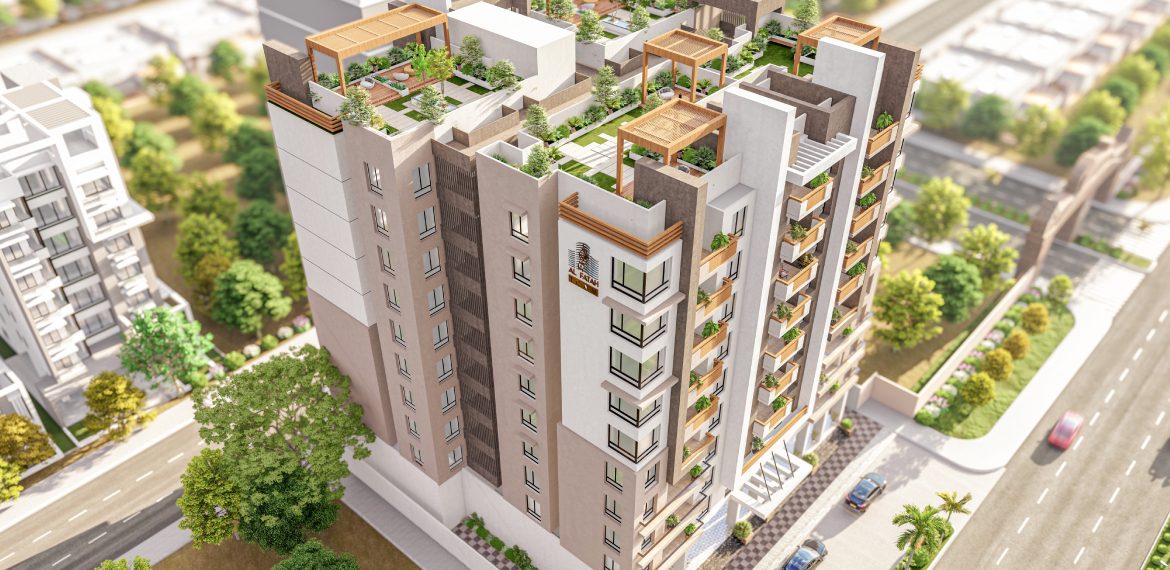
How safe is a high-rise structure during a tremor? In the wake of recent seismic activity globally, this question is foremost in the minds of Karachi residents. The truth is that earthquake-resistant buildings are often safer than smaller, older structures because they are engineered to absorb and dissipate energy rather than resist it rigidly. Modern high-rise developments like Al Fatah Icon utilise advanced structural dynamics, deep piling, and flexible materials to ensure that the tower sways harmlessly during a quake, protecting both the residents and the asset. By adhering to international building codes, Al-Fatah Builders & Developers are redefining what it means to be safe in a vertical city.
The Science of Seismic Resilience
The idea of safety in building has changed over time. In the past, buildings were constructed to be rigid, which frequently caused them to shatter during earthquakes. Today, ductility, a material’s capacity to distort under stress without breaking, is the guiding principle of earthquake-resistant buildings.
Al Fatah Icon incorporates this principle into its very core.
- Flexible Joints: Steel reinforcements allow the building to move slightly during a quake, dissipating the shockwaves.
- Shear Walls: The building’s vertically oriented reinforced concrete walls offer tremendous rigidity against lateral stresses like wind and earthquakes.
- Damping Systems: Advanced engineering techniques reduce the amplitude of vibrations, ensuring that even on higher floors, the movement is minimised.
Every beam and column of the project will have structural safety that Karachi residents can rely on, thanks to this innovative methodology.
Why Foundation Depth Matters
A structure is only as strong as its foundation. The foundation is the first line of defense for earthquake-resistant buildings. The superstructure is more stable the deeper the base.
Al Fatah Icon is supported by a substantial piling foundation that reaches far into the bedrock.
- Load Distribution: The weight of the tower is transferred to stable soil layers far beneath the surface.
- Anchoring: When ground liquefies, a common hazard in coastal towns, deep piling keeps the building from tilting or shifting.
- Soil Testing: To ensure that the site’s soil composition complied with safe high-rise construction regulations, thorough geotechnical assessments were carried out.
This invisible engineering is what separates a standard apartment block from a true fortress against nature.
The Myth of Low-Rise Safety
There is a widespread misperception that structures that are lower are safer during seismic activity. However, unreinforced masonry, which is brittle and prone to collapsing, is used to build a large number of low-rise buildings in Karachi. Al Fatah Icon and other earthquake-resistant buildings, on the other hand, are deliberate constructions.
The “natural period” of vibration in high-rise buildings differs from that of low-rise homes. While flexible high-rises withstand the waves, shorter buildings tend to shake more violently during a normal high-frequency earthquake. Investing in safe high-rise construction allows you to benefit from the supervision of structural engineers who have calculated every load and stress point, a level of scrutiny that is rarely applied to small homes.
Fire Safety: The Other Half of the Equation
Fire is frequently a risk caused by humans, whereas earthquakes are a natural hazard. Both must be addressed in a home that is truly safe. Al Fatah Icon ensures a complete approach to safety by integrating a thorough firefighting system that unit owners can rely on.
- Sprinkler Systems: Automatic sprinklers are installed in key areas to suppress flames instantly.
- Fire-Rated Doors: Special doors prevent the spread of smoke and fire between apartments and corridors for up to 2 hours.
- Pressurized Stairs: The stairwells have a clear and breathable escape route in case of an emergency since they are pressurized to keep smoke out.
By incorporating a cutting-edge firefighting system into apartment architecture, occupants are shielded from a variety of risks, not only seismic ones.
Ensuring Building Structural Integrity
The structural integrity of a project determines how long it will last. This phrase describes the structure’s capacity to sustain its designated load over time without undergoing deformation. The quality of the materials used in earthquake-resistant buildings preserves their integrity.
Only premium steel and concrete mixtures that have undergone laboratory testing are used by Al-Fatah Builders & Developers.
- Corrosion Resistance: Rust, which can undermine a structure over decades from the inside out, is prevented with treated steel.
- Curing Processes: Before any weight is put, concrete must be properly hydrated to reach its greatest strength.
- Regular Audits: Inspections by third parties confirm that the building’s structural integrity is maintained throughout the whole construction process.
Structural Safety in Karachi: A New Benchmark
Karachi is located close to active seismic lines; urban planners place a high premium on structural safety. The stringent Seismic Zone 2B (or above) standards are not followed by all developers, nevertheless.
The Al Fatah Icon is designed to surpass these regional regulations. The project provides a level of security uncommon in the local market by implementing international best practices for earthquake-resistant buildings.
- Zone Compliance: The design specifically accounts for the seismic zone of University Road.
- Factor of Safety: The engineers apply a “safety factor” to all calculations, meaning the building is strong enough to handle forces significantly higher than the worst expected earthquake.
The Role of Modern Technology
Earthquake-resistant buildings are now more intelligent thanks to technological developments. Before laying a single brick, engineers can test the building against simulated earthquakes using computer-aided models.
These models have optimized the positioning of beams and columns at Al Fatah Icon. This digital stress test makes sure the frame has no weak spots. Residents may rest easy during a tremor because to this data-driven approach to establishing structural integrity.
Investing in Peace of Mind
While purchasing an apartment is a financial choice, residing in one is a sentimental one. The sense of security cannot be purchased. You are purchasing insurance against the unpredictable when you select one of Al Fatah’s earthquake-resistant buildings.
Every component, including the deep foundation, apartment procedures, and firefighting system, is intended to safeguard your most precious possession: your family. Knowing that your house is built to last is the ultimate luxury in a city where building quality varies greatly.
Conclusion: Safety is Non-Negotiable
As we move further into 2026, the demand for resilient housing is non-negotiable. Earthquake-resistant buildings are no longer a niche preference; they are a necessity for the modern urban dweller. Al Fatah Icon stands as a testament to what is possible when engineering excellence meets a commitment to human safety.
By prioritizing the structural safety Karachi residents need, Al Fatah has created a sanctuary that stands tall against nature’s fury. Don’t compromise on the bones of your home. Choose a structure that is built to last for generations.
Is your home built to handle the shock? Visit the Al Fatah Icon site office to learn more about our structural safety features and review our engineering certifications.
FAQs
What makes Al Fatah Icon earthquake resistant?
The structure is one of the best earthquake-resistant structures in the region, thanks to its deep pile base and reinforced concrete frame with shear walls.
Is high-rise living safe during an earthquake?
Yes. Safe high-rise construction is frequently safer than fragile low-rise structures because it permits the building to swing with the seismic waves rather than firmly fighting them.
Does the building have a firefighting system?
Absolutely. Hydrants, extinguishers, and smoke detectors are all part of a contemporary firefighting system that apartment owners can rely on on every floor.
How is the structural integrity verified?
To make sure the building’s structural integrity satisfies all international safety requirements, Al-Fatah Builders & Developers regularly performs material testing and third-party audits.