
Buying commercial property is a significant financial decision, and rushing into it without proper evaluation can lead to costly mistakes. Whether you are looking at an office, a showroom, or a retail unit, having a clear process to follow makes the entire experience less stressful. This commercial property buying guide walks through the key steps to take before signing any agreement in Karachi’s commercial real estate market. Think of this commercial property buying guide as a checklist you can return to at every stage of the purchase.
What Should I Check Before Buying Commercial Property?
Before making any commitment, there are several practical points worth reviewing. This commercial property buying guide starts with the basics that apply to almost any commercial purchase.
- Legal ownership and title: Confirm that the seller or developer has clear legal ownership and the right to sell the property
- Building approvals: Check that the project has proper construction and building plan approvals from the relevant authorities
- Pricing and payment terms: Understand the full cost, including the base rate, any additional charges, and the payment schedule
- Physical condition: For completed units, inspect the actual space rather than relying only on brochures or renderings
- Location and accessibility: Assess how easy it is for staff, clients, and customers to reach the property
Following this commercial property buying guide step by step reduces the chances of overlooking something important during the excitement of finding a good-looking unit.
How Do I Evaluate a Commercial Location?
Location evaluation goes beyond simply checking the address on a map. This part of the commercial property buying guide focuses on a structured approach that helps you judge whether a specific spot will actually work for your business or investment goals.
- Visit at different times of day to observe traffic patterns, foot traffic, and general activity levels
- Check nearby businesses to understand what kind of commercial activity already exists in the area
- Review connectivity to main roads and public transport routes, since this affects both staff and customer access
- Look at future development plans in the surrounding area, since new infrastructure projects can influence long-term value
- Consider the immediate neighborhood, including nearby residential density, which often drives footfall for retail-focused businesses
A commercial property checklist built around these factors can help you compare multiple locations more objectively rather than relying on first impressions alone. This is one of the more overlooked parts of any commercial property buying guide, since location evaluation often gets less attention than price or paperwork.
What Documents Should I Verify?
Documentation is one of the most important parts of any property purchase, and this is especially true for commercial real estate Karachi buyers should not overlook. Skipping this step can lead to complications long after the purchase is complete. Anyone active in commercial real estate Karachi-wide should treat this step as non-negotiable.
Key documents to verify include:
- Title deed or ownership documents confirming the seller’s legal right to the property
- No-objection certificates (NOCs) from relevant authorities, confirming the project has cleared necessary approvals
- Building plan approval from the appropriate regulatory body overseeing construction in the area
- Payment receipts and agreements that clearly outline the terms of any installment plan
- Possession and completion timelines, especially for projects still under construction or listed as coming soon
Proper property due diligence at this stage can prevent legal or financial issues from surfacing later, particularly for buyers who are purchasing in a project that has not yet been completed.
Building a Practical Checklist for Buyers
Having a written list makes the evaluation process more consistent, especially if you are comparing several properties at once. A useful commercial property checklist typically includes:
- Confirming the exact unit size and layout matches what was advertised
- Reviewing the total cost, including the per-square-foot rate and any additional fees
- Checking the developer’s track record and previous completed projects
- Verifying that the project has proper legal and regulatory approvals
- Comparing the payment plan structure against your own budget and cash flow
Keeping this checklist on hand during site visits and meetings with the seller or developer helps ensure that no important detail gets missed in the process.
Steps for Buying Commercial Property in Karachi
For anyone new to the process, buying commercial property Karachi-wide typically follows a general sequence of steps. This sequence forms the backbone of most sound commercial property buying guide advice.
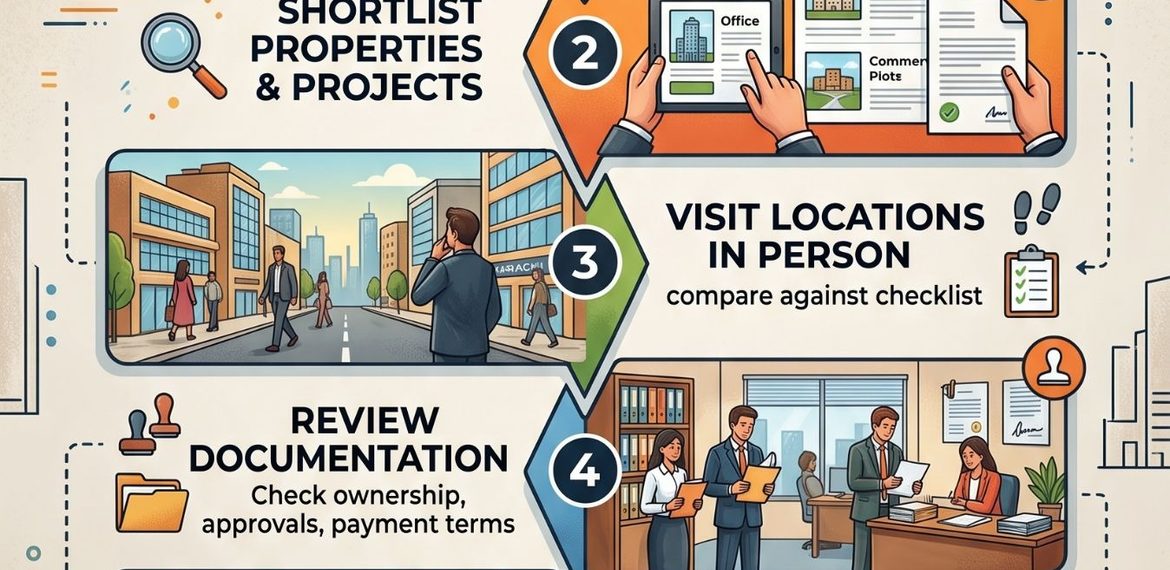
- Define your requirements, including budget, preferred location, and unit size
- Shortlist a few properties or projects that match your criteria
- Visit each location in person and compare them against your checklist
- Review all documentation related to ownership, approvals, and payment terms
- Negotiate terms where possible, including price, payment schedule, and any additional conditions
- Finalize the agreement only after all documents and approvals have been verified
Following these steps in order, rather than skipping ahead to signing an agreement, gives buyers a clearer picture of what they are actually purchasing. This applies whether you are buying commercial property Karachi-wide for the first time or adding another unit to an existing portfolio.
Common Mistakes to Avoid When Buying Commercial Property
Even careful buyers can make avoidable mistakes during the purchase process, and this commercial property buying guide would not be complete without addressing them. A few common ones include:
- Relying solely on verbal promises instead of getting terms in writing
- Skipping a site visit and depending only on photos or marketing materials
- Not confirming whether the project has the required approvals from relevant authorities
- Ignoring the fine print in payment plans, particularly around late payment penalties or rate changes
- Failing to compare multiple properties before making a final decision
Avoiding these mistakes often comes down to following a structured process rather than making decisions based on urgency or pressure from a seller.
It is also worth confirming that any project you are considering has the necessary approval from the Sindh Building Control Authority (SBCA), which is the government body responsible for reviewing and approving building plans, issuing no-objection certificates, and monitoring construction activity across Karachi and the broader province. Checking for SBCA approval as part of your property due diligence adds a layer of confidence that the project meets required legal and safety standards before you commit any funds.
Conclusion
Following a structured commercial property buying guide, rather than rushing into a purchase, can save buyers from costly mistakes down the line. From checking documentation to evaluating the location and reviewing payment terms, each step plays a role in making sure the investment is sound. A careful approach today can prevent complications that might otherwise surface months or years after the purchase.
If you want guidance on evaluating current commercial property options, reach out to Al Fatah Builders & Developers to discuss available units, documentation, and payment plans that suit your needs.
Frequently Asked Questions
How long should the due diligence process typically take before finalizing a commercial property purchase?
This varies depending on the complexity of the transaction, but buyers should generally allow a few weeks to properly review documentation, visit the site, and consult with relevant professionals if needed.
Is it necessary to hire a lawyer when buying commercial property?
While not always mandatory, involving a lawyer to review contracts and verify documentation can help catch issues that may not be obvious to a buyer without legal training.
What should a buyer do if a developer is unwilling to share certain documents?
Hesitation or refusal to share ownership documents or approvals is generally considered a warning sign, and buyers should proceed cautiously or seek clarification before moving forward.
Can a buyer request a payment plan different from what is initially offered?
Some developers are open to negotiating payment terms, particularly for larger purchases, though this depends on the specific project and current market conditions.
How important is it to check a developer’s past projects before buying?
Reviewing a developer’s completed projects can give buyers a sense of construction quality, delivery timelines, and overall reliability, making it a useful step in the evaluation process.