Managing a rental property involves much more than collecting monthly rent. Successful landlords understand that effective lease management in Karachi requires proper documentation, clear communication, legal awareness, and proactive property maintenance. Whether you own a single apartment or multiple investment properties, establishing a structured leasing process helps protect your investment while building positive relationships with tenants.
With Karachi’s growing residential market, landlords are increasingly expected to provide professionally managed rental experiences. A well-prepared lease agreement, verified tenant information, and transparent communication not only reduce disputes but also contribute to long-term occupancy and stable rental income.
Why Proper Lease Management Matters
A lease agreement establishes the legal relationship between a landlord and a tenant. It defines each party’s rights, responsibilities, and expectations throughout the tenancy.
Without proper lease management, landlords may face challenges such as:
- Payment disputes
- Property damage
- Unclear maintenance responsibilities
- Unauthorized occupancy
- Legal complications
- Difficult tenant communication
By following a structured approach, property owners can minimize these risks while creating a positive rental experience for everyone involved.
Understanding Lease Management in Karachi
Effective lease management in Karachi begins long before handing over the keys. Landlords should prepare every stage of the rental process carefully, from marketing the property and screening potential tenants to drafting agreements and maintaining proper records.
Professional lease management generally includes:
- Property documentation
- Tenant screening
- Lease preparation
- Rent collection procedures
- Maintenance coordination
- Renewal management
- Record keeping
Each step contributes to protecting both the landlord’s interests and the tenant’s rights.
Verify Property Documentation First
Before advertising a rental property, owners should ensure that all relevant documents are accurate and readily available.
Important records may include:
- Ownership documents
- Property tax records
- Utility information
- Building approvals
- Maintenance records
- Previous lease history
Keeping documentation organized makes future leasing much more efficient and demonstrates professionalism to prospective tenants.
Creating a Strong Tenant Agreement
One of the most important aspects of tenant agreements is clarity. Every lease should clearly outline the responsibilities of both parties to minimize misunderstandings during the tenancy.
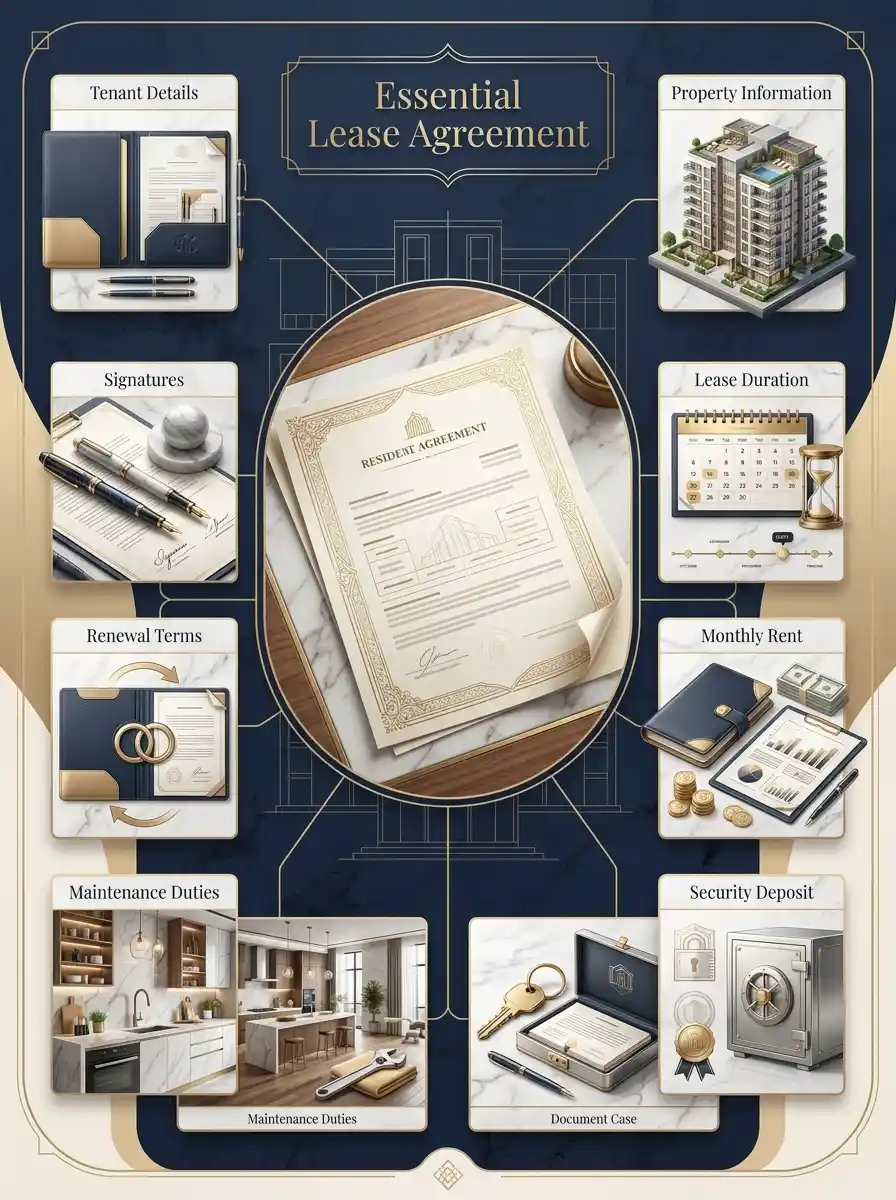
A comprehensive agreement should generally include:
- Tenant and landlord information
- Property address
- Lease duration
- Monthly rent
- Security deposit
- Payment schedule
- Maintenance responsibilities
- Utility obligations
- Renewal conditions
- Termination clauses
Clearly written agreements help establish expectations from the very beginning.
The Importance of the 11-Month Contract
Many residential rentals in Pakistan commonly use an 11-month contract. While practices may vary depending on the circumstances and applicable regulations, this lease duration is widely used for residential tenancy arrangements.
Regardless of the lease period selected, landlords should ensure that every agreement is properly documented, signed by all parties, and retained for future reference.
The following visual outlines the essential elements that every well-prepared residential lease agreement should include before a tenant moves in.
A Practical Landlord Guide in Karachi
Every successful landlord guide in Karachi begins with selecting reliable tenants. While no screening process can eliminate every potential issue, careful evaluation significantly reduces future risks.
Consider reviewing:
- Identity documentation
- Employment information
- Income stability
- Previous rental references
- Family size
- Intended occupancy
- Emergency contact details
Open communication during the application process also helps build mutual trust before the tenancy begins.
Property Authenticity Protects Everyone
Before entering into any rental arrangement, landlords should ensure that all ownership records and property details are accurate. Likewise, prospective tenants should verify that the individual leasing the property has the legal authority to do so.
Property authenticity protects both parties by reducing the risk of fraudulent transactions and ensuring that the lease is based on legitimate ownership.
For apartment owners in professionally developed residential communities, maintaining complete project documentation also contributes to smoother leasing procedures. Buyers considering investment apartments may benefit from exploring completed developments such as Al Fatah Arcade, where ready-for-possession units and established community infrastructure can simplify long-term rental management.
Rental Management Requires Ongoing Communication
Successful rental management extends well beyond signing a lease agreement. Maintaining regular communication with tenants encourages timely reporting of maintenance concerns, improves satisfaction, and often contributes to longer tenancy periods.
Good communication practices include:
- Responding promptly to maintenance requests
- Providing advance notice before inspections
- Keeping payment records transparent
- Documenting significant conversations
- Addressing concerns professionally
These habits help create positive landlord-tenant relationships while reducing avoidable disputes throughout the lease period.
Protecting Your Rental Property Throughout the Lease
One of the most common concerns among property owners is protecting their investment while ensuring tenants enjoy a comfortable living experience. Establishing clear expectations from the beginning of the tenancy helps minimize misunderstandings and encourages responsible occupancy.
Landlords can better safeguard their property by:
- Conducting a detailed move-in inspection
- Recording the property’s condition with photographs
- Clearly defining maintenance responsibilities
- Collecting an agreed security deposit
- Documenting any repairs during the tenancy
- Performing periodic inspections with prior notice
These practices help reduce disputes at the end of the lease while protecting both parties’ interests.
Financial Planning Is an Important Part of Lease Management
Effective lease management extends beyond legal documentation. Property owners should also establish organized financial processes that support accurate record keeping and long-term profitability.
Important financial practices include:
- Maintaining rent payment records
- Issuing payment receipts
- Tracking maintenance expenses
- Recording security deposits separately
- Planning for future repair costs
- Reviewing rental income periodically
Keeping organized financial records allows landlords to evaluate the overall performance of their rental property while simplifying future decision-making.
Legal Awareness Helps Avoid Future Disputes
Every landlord should understand the legal responsibilities associated with renting residential property. While lease agreements provide the foundation for the landlord-tenant relationship, following applicable regulations and maintaining transparent documentation further strengthens that relationship.
Before renting out any apartment, landlords should also verify that the property complies with all relevant approvals and documentation issued by the appropriate regulatory authorities, including the Sindh Building Control Authority (SBCA), where applicable.
Remaining informed about evolving regulations and maintaining complete records helps reduce legal uncertainty while promoting fair tenancy practices.
Essential Lease Management Checklist
A structured leasing process makes property management significantly easier. The following checklist summarizes the key responsibilities every landlord should complete before and during a tenancy.
| Stage | Recommended Action |
|---|---|
| Property Preparation | Verify documents and inspect the property |
| Tenant Selection | Review identity, employment, and references |
| Lease Agreement | Clearly define responsibilities and payment terms |
| Move-In | Document property condition and collect deposit |
| During Tenancy | Maintain communication and address maintenance promptly |
| Lease Renewal or Exit | Complete final inspection and update records |
This step-by-step visual provides a simple overview of the complete rental management process followed by successful property owners.
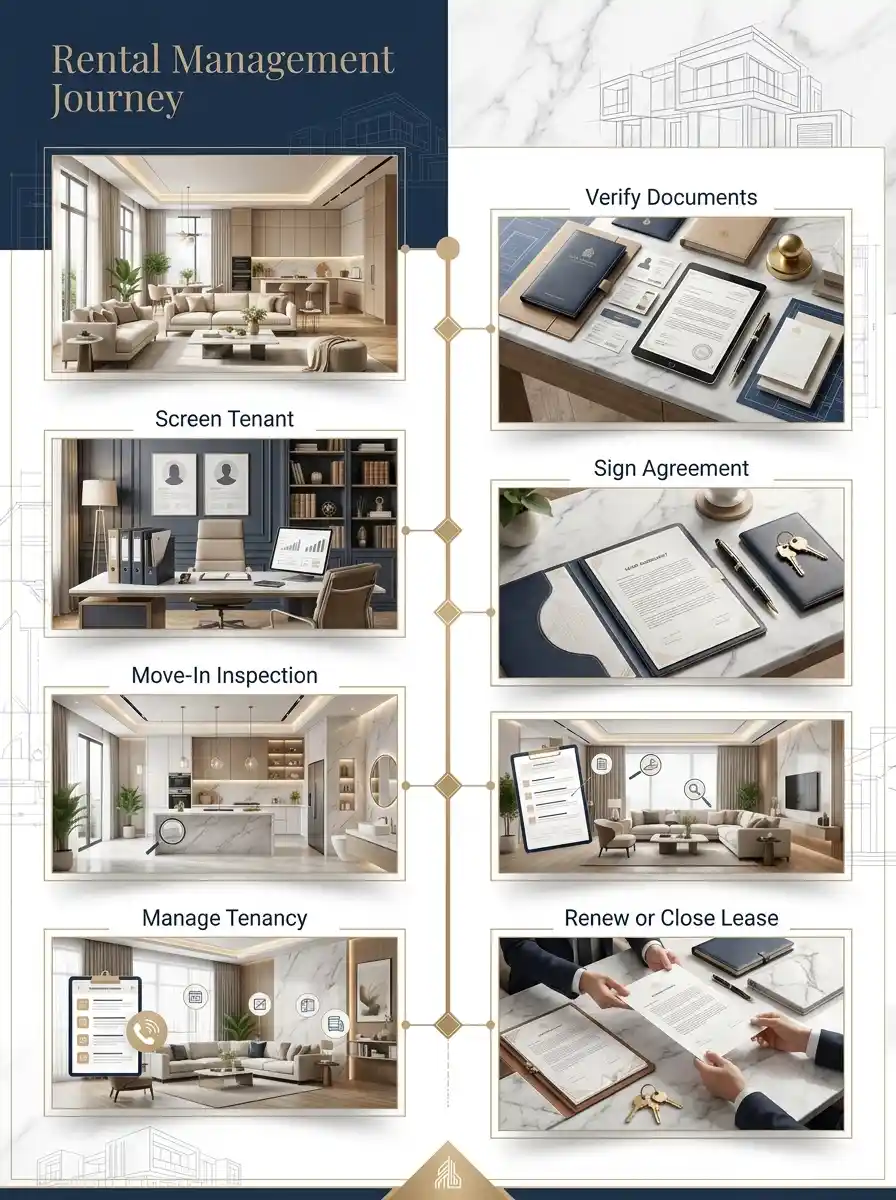
Use the above lease management checklist as a practical reference for managing each stage of the rental process with greater confidence.
Why Professional Lease Management Benefits Both Landlords and Tenants
Successful lease management creates a more positive rental experience for everyone involved. Landlords benefit from improved property protection, organized financial records, and reduced disputes, while tenants enjoy clear expectations, transparent communication, and timely maintenance support.
As Karachi’s residential market continues to develop, professionally managed rental properties are becoming increasingly attractive to prospective tenants. Apartment owners who adopt structured leasing practices position themselves for stronger long-term returns and more sustainable tenant relationships.
Investors purchasing apartments in professionally developed communities may also consider projects such as Al Fatah Icon, where modern apartment layouts and quality residential infrastructure offer long-term appeal for both owner-occupiers and future rental opportunities.
Conclusion
Effective lease management in Karachi is built on preparation, transparency, and consistency. From verifying property documents and drafting comprehensive tenant agreements to maintaining accurate financial records and fostering open communication, every step contributes to protecting your investment while creating a positive rental experience.
Whether you own your first rental apartment or manage multiple residential properties, adopting professional lease management practices can help minimize risks and support long-term success. If you’d like to learn more about Al Fatah Builders & Developers or explore residential projects designed for homeowners and investors, feel free to contact our team. We’ll be happy to guide you toward the right property solution for your goals.
Frequently Asked Questions
1. What is lease management in Karachi?
Lease management in Karachi refers to the process of preparing lease agreements, managing tenant relationships, maintaining property records, collecting rent, and ensuring smooth tenancy throughout the rental period.
2. What should be included in a lease agreement?
A lease agreement should include tenant and landlord details, property address, lease duration, rent amount, security deposit, maintenance responsibilities, payment schedule, renewal terms, and termination conditions.
3. Why is an 11-month contract commonly used?
An 11-month contract is a widely used residential tenancy arrangement in Pakistan. Regardless of the lease duration, agreements should always be properly documented and signed by all parties.
4. How can landlords protect their rental property?
Landlords can protect their property by verifying tenants, documenting the property’s condition, maintaining written agreements, collecting security deposits, keeping financial records, and conducting periodic inspections with appropriate notice.
5. Why is professional rental management important?
Professional rental management improves communication, reduces disputes, protects property value, supports legal compliance, and helps create a positive long-term relationship between landlords and tenants.